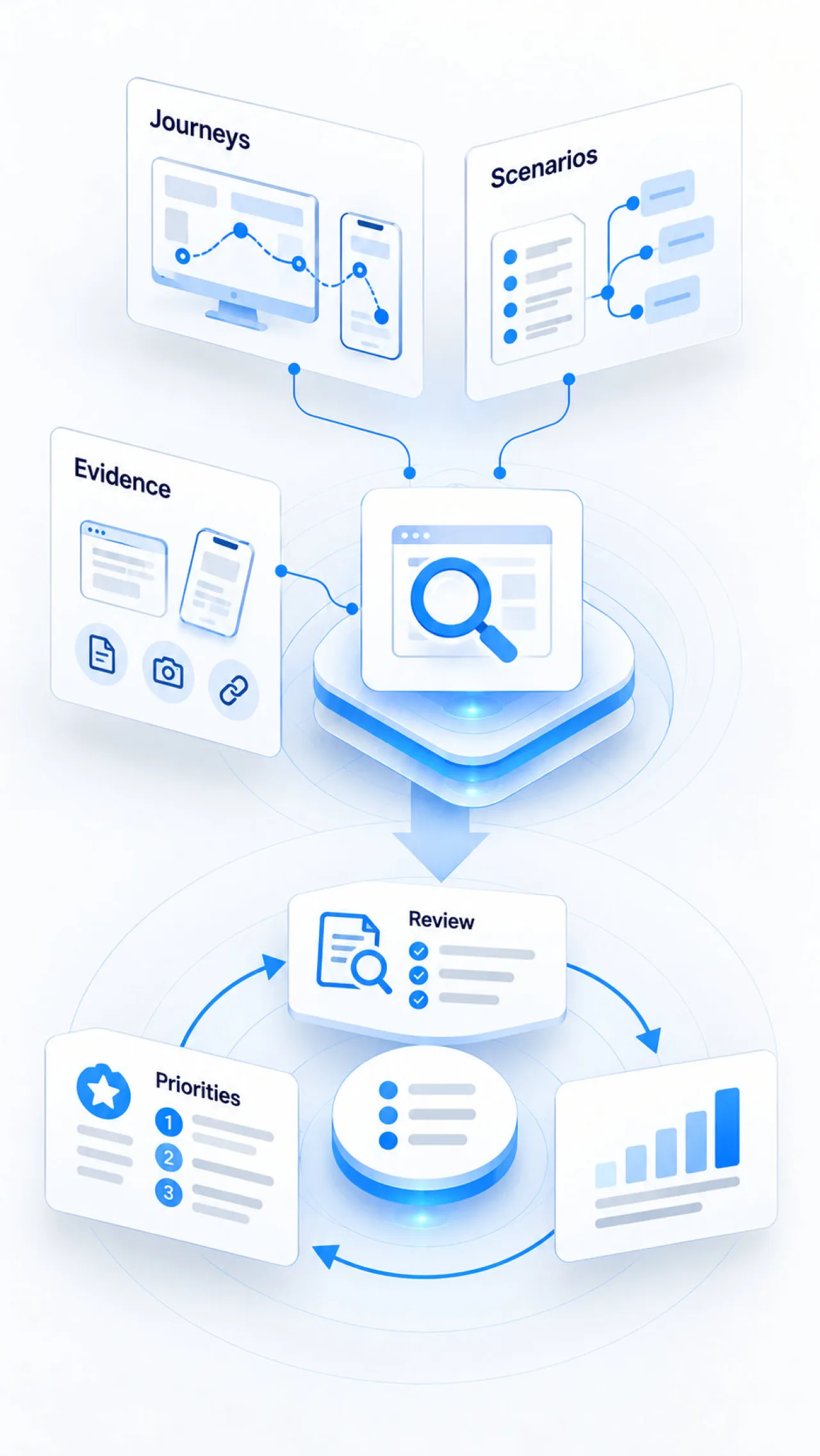
A usable page helps a person complete a task. A search result that looks clear may lead to confusing filters; a form may accept an input but give an unclear error; an account or checkout journey may fail at a transition. We explore the agreed interactions and record where the expected result and observed behaviour differ.
Each journey identifies its task, preconditions, role, browser, device configuration, locale and authorised session context. Evidence connects the steps to the barrier and its severity. An actual browser supports meaningful interaction, while mobile emulation remains an approximation rather than a claim that the journey ran on a physical phone. Real-device checks and research with recruited participants require their own agreed coverage.
Location, history and cookies are used only when the test context and rights permit them. We do not reuse someone else's sessions or weaken consent and access controls. If CAPTCHA or another protection blocks a step, that part stays blocked or untested until an approved safe route is arranged. A real purchase, payment, booking or notification requires separate permission, controlled data and agreed cleanup or charge handling.
The report gives your team useful improvements without claiming every feature, device or personalisation has been tested. It is a usability investigation, rather than a formal accessibility certification or a technical SEO audit. Acceptance concerns the agreed journey evidence and reviewed recommendations. Redesign and implementation are separate unless included explicitly, and errors in our agreed findings are corrected as part of the result.