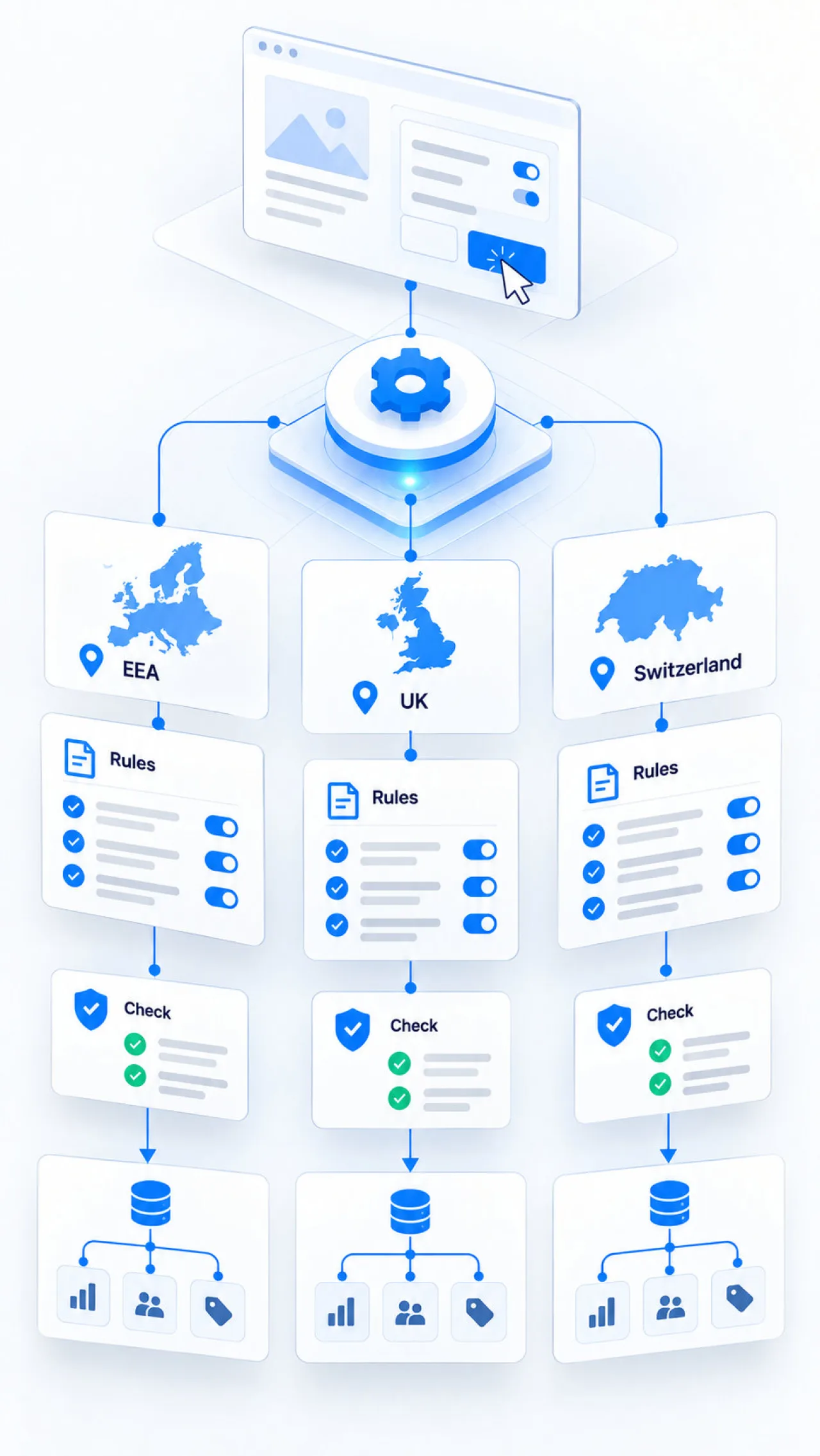
This service starts with a website focused on EEA, UK and Swiss traffic. We implement the approved consent requirements for the named use cases and connect them to your CMP and affected tags. The working coverage matrix distinguishes the regions and their requirements so that each agreed path can be configured and checked.
The policy decision maker confirms applicability, purposes and any justified exceptions, and approves wording and translations. EEA device-access rules and national application, current UK exceptions and Swiss processing requirements need their own treatment. We do not infer that every analytics purpose is exempt or that every Swiss use case uses the same default as the EEA. Platform policies, including relevant publisher CMP requirements, are another layer and do not replace law.
We agree language and domain coverage separately from regional coverage. Language selection, location routing, exception precedence and uncertain-location behaviour are explicit. A domain group names its actual members, while vendor licensing and supported cross-domain sharing remain separate. Returning-user choices are considered where the selected path crosses rules or locations.
The configuration aligns the user controls and saved choices with approved purposes and named recipients. Relevant Google fields are checked separately, and custom/non-Google tags or server-side paths need their own accepted controls. The supported Basic or Advanced route determines allowed tag and network behaviour under the approved requirements; denied storage is not a universal promise of zero requests.
Representative checks follow initial choice, refusal or partial choice, valid saved state, withdrawal, expiry, navigation and regional exceptions or CMP failure as relevant. We compare expected behaviour with UI/state, network/storage and recipient evidence, and leave inaccessible checks pending with an owner and next step. You receive the working accepted configuration, mappings, operating guidance, check records and release status. This focused setup can be selected directly; it does not require buying the U.S.-focused service or duplicating an already included rule or connection.