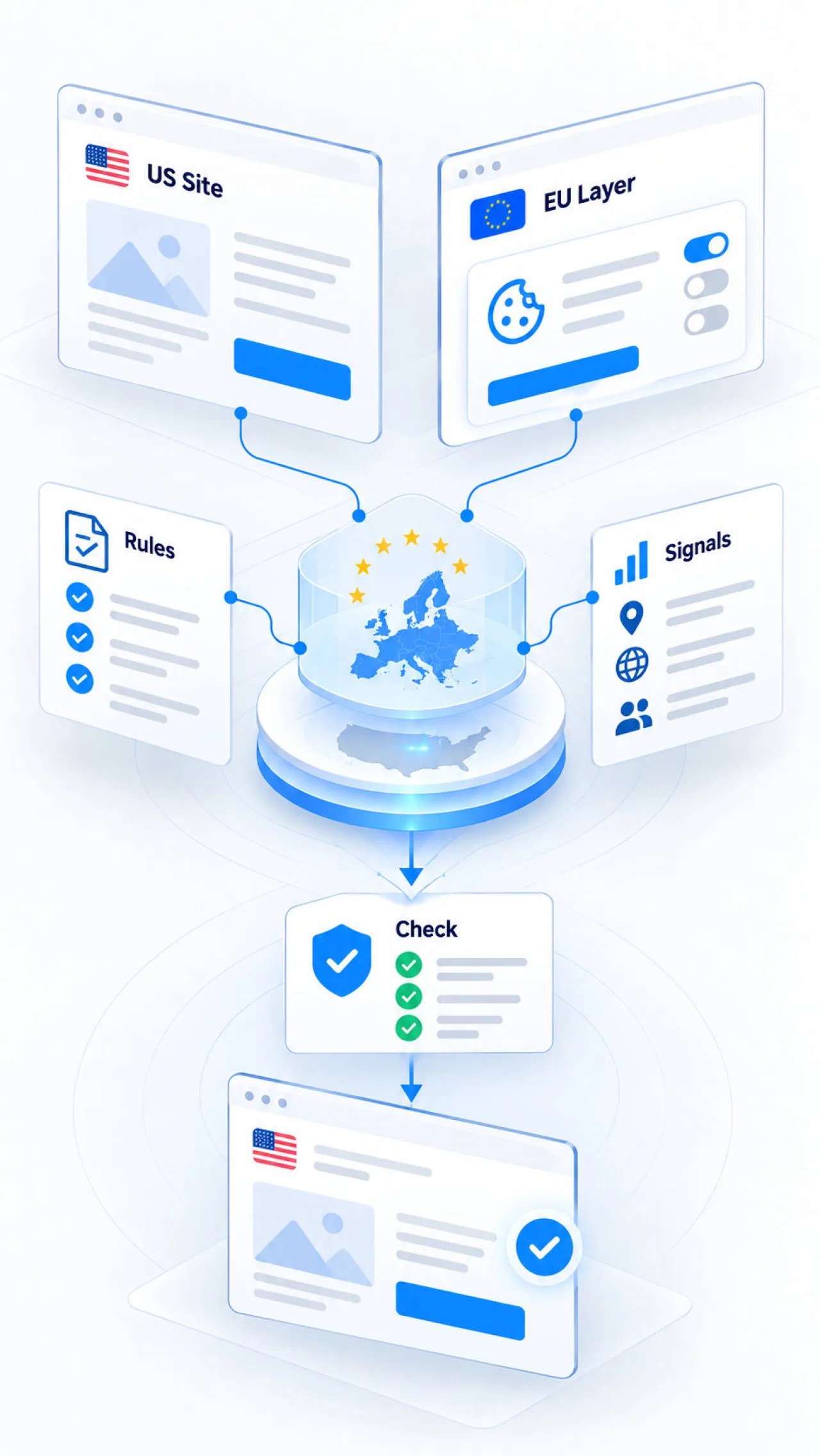
A website primarily focused on the United States may need an EU-oriented consent layer for relevant traffic or use cases. We configure that layer around your approved requirements and existing CMP/tag environment. The proposal identifies the jurisdictions, purposes, vendors, languages and domain coverage that actually matter, rather than assume your business focus settles legal applicability.
The order-level coverage matrix describes expected behaviour both within the selected regional layer and elsewhere. We agree rule precedence, exceptions and a fallback for uncertain or conflicting location evidence. Location is a routing input, not proof of residency or the law that applies. A returning visitor who changes region is considered where material to the accepted setup, and language selection remains separate from jurisdiction.
We connect the approved choice controls and preferences to the affected tags and named recipients. Where the site has relevant U.S. browser opt-out obligations, such as GPC handling for covered sale or sharing, those decisions and dependencies are recorded separately from Google Consent Mode fields. An absent opt-out signal is not affirmative consent. This service does not automatically supply a complete U.S. privacy programme or rebuild every conversion pipeline.
The supported Basic or Advanced route and allowed pre-choice or post-refusal traffic are agreed with the responsible policy decision maker. A denied storage state does not by itself mean that no measurements are transmitted. We implement the accepted regional engineering, including defaults, choice updates, saved-state handling and withdrawal controls, and remain responsible for its agreed result.
Representative checks examine the regional paths, refusal and partial choice, restoration and withdrawal, navigation and relevant fallback or CMP failure. We compare UI/state evidence with requests, storage and named recipient behaviour where access permits. Pending private or server checks have a reason, owner and next step. The handoff includes configuration access or export where applicable, mappings, check evidence, operating guidance and release status. A shared rule or connection already included in an accepted task is counted once.