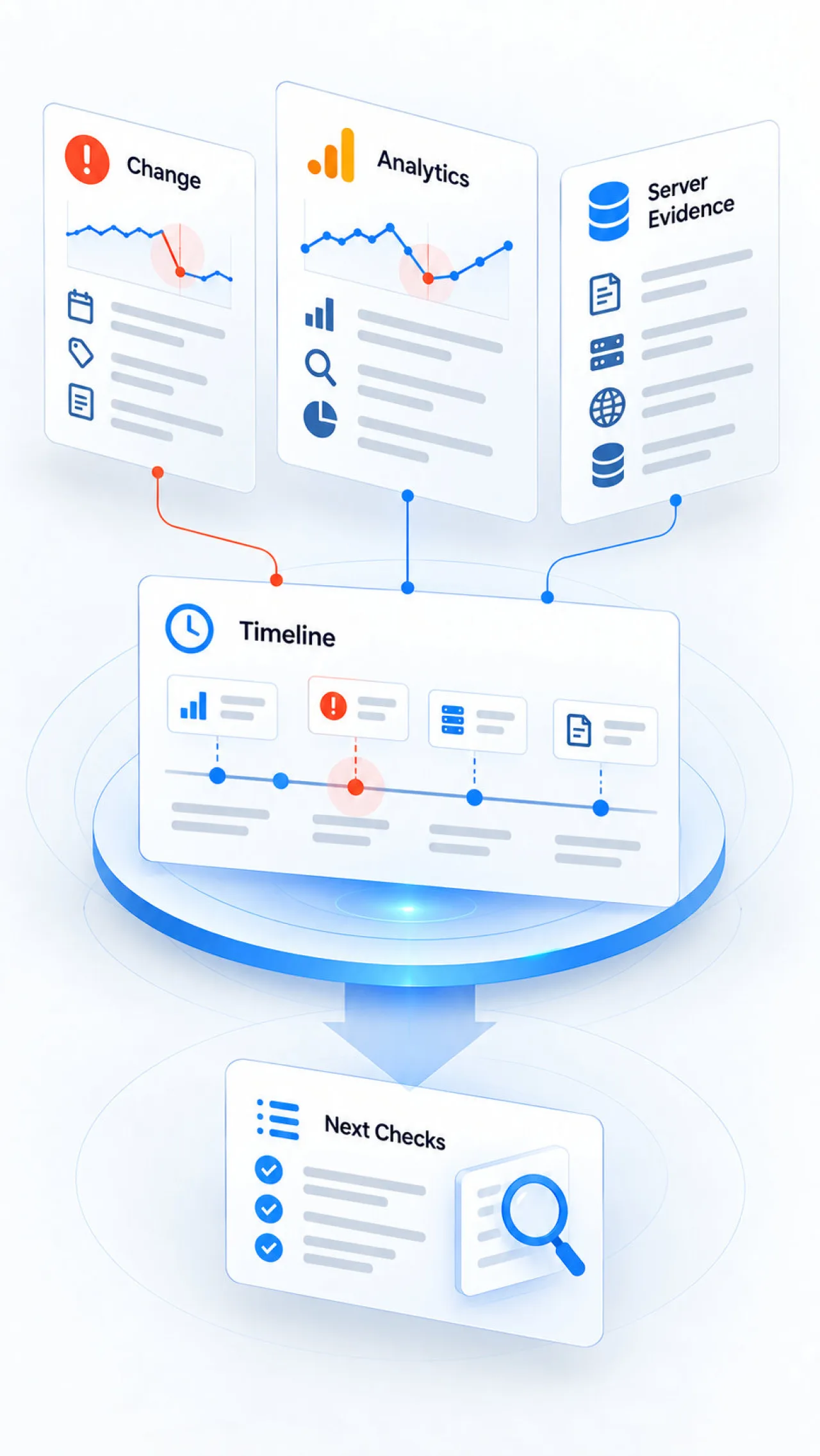
An unexpected rise or fall in a chart is a question to investigate. We first name the metric and report, the period and timezone, and the comparison that made the change stand out. We then review relevant property configuration, acquisition context, event history and known changes. Users, active users, sessions, views, events, key events and revenue describe different things; an HTTP request count is another measure again.
Relevant-period server access or usable server or edge logs form a normal part of this investigation. We agree the minimum evidence and a secure route after the initial discussion, preferring restricted read access or a prepared relevant-period extract over blanket server credentials. We record the source, timeframe, timezone, retention and coverage. Origin logs can miss requests served from a cache or edge; assets, health checks and crawlers are not automatically Analytics sessions. The actual hosting and logging arrangements determine which comparisons are meaningful.
Analytics and server evidence do not observe every visitor in the same way. Consent, collection routes, report filters, metric scope, attribution and data freshness can affect the selected comparison. We assess those differences before interpreting patterns. A bot may or may not execute JavaScript, and geography, an IP address or a user agent alone does not identify a person, establish fraudulent intent or justify blocking traffic.
If logs were rotated, never retained or have incomplete coverage, we explain how that limits the question. A separately agreed preliminary assessment can still review the available Analytics evidence and identify the next useful observation. Existing authorized archives may help where they genuinely exist. We label that limited route clearly instead of presenting it as a fully evidenced investigation or claiming to reconstruct missing history.
The deliverable is a reviewed report with the evidence timeline, supported explanations and their strength, competing hypotheses, explanations ruled out where the evidence permits, remaining uncertainty and proposed next checks. Where the evidence cannot distinguish causes, we explain why and specify a practical next action. That can be a useful investigation outcome; it does not excuse a generic report with no analysis of the agreed question.
An Exploration may be a useful internal technique during the investigation. You do not have to buy a separate Exploration service for that internal work; a distinct saved configuration for your later use can be commissioned expressly. The investigation itself does not perform repairs, change filters or attribution, replay events, enable new logging or create ongoing monitoring. Those actions are explained and authorized separately.
We agree the scope, evidence handling, report format, acceptance criteria and charges before paid work, including provider costs where relevant. Where staff-hour pricing is agreed, scope, rate and billable hours are fixed beforehand; actual staff time improves future estimates without an automatic true-up. Our underestimation, inefficiency and introduced faults remain our responsibility. Genuinely additional unforeseeable work arising through no fault of metricfixer is explained immediately and the next step jointly agreed before additional paid work. The handoff includes unresolved actions and access revocation; it does not promise free future monitoring.