
Published Nov 5, 2026
Meta's New Brand Ads: Super Burst, First Impression and Aggregated View Time
Meta is expanding premium brand advertising with reserved launch windows, first-position Feed ads and trending Reels. This review explains availability, buying risks and how to measure value beyond video views.
Category: Online advertising · By metricfixer Expert Team
Meta's latest brand-advertising tools offer different ways to buy prominence: a concentrated launch window, the first advertising position in Facebook Feed, or a place beside trending Reels. Aggregated View Time asks a different question: how much viewing can a brand accumulate across a week? This review separates the buying opportunities from the measurement promises and explains how large advertisers can evaluate them without confusing exposure with business impact.
Practical starting point: define what ordinary media buying cannot deliver before paying for a premium format. Then confirm access, the booking terms and a credible way to measure the additional value. Research reviewed: 4 November 2026. Availability below reflects the latest public evidence located, not an audit of every advertising account.
Contents
Executive summary
The useful distinction is not between small advertisers and advertisers with enough money to buy something exclusive. It is between different business requirements. A national launch may need broad exposure at a particular time. Another brand may need sustained recognition over several weeks. A third may need culturally relevant creative rather than a more expensive position.
These requirements should not share one automatic answer. Treat the new inventory as a potential addition to a media plan, not a replacement for a working acquisition programme. Treat the new viewing measure as a diagnostic, not proof of additional sales.
For a large brand, the strongest reason to test is a commercially important constraint that ordinary buying cannot reliably satisfy. The weakest is the belief that premium placement, exclusivity or a larger attention number must produce a better return.
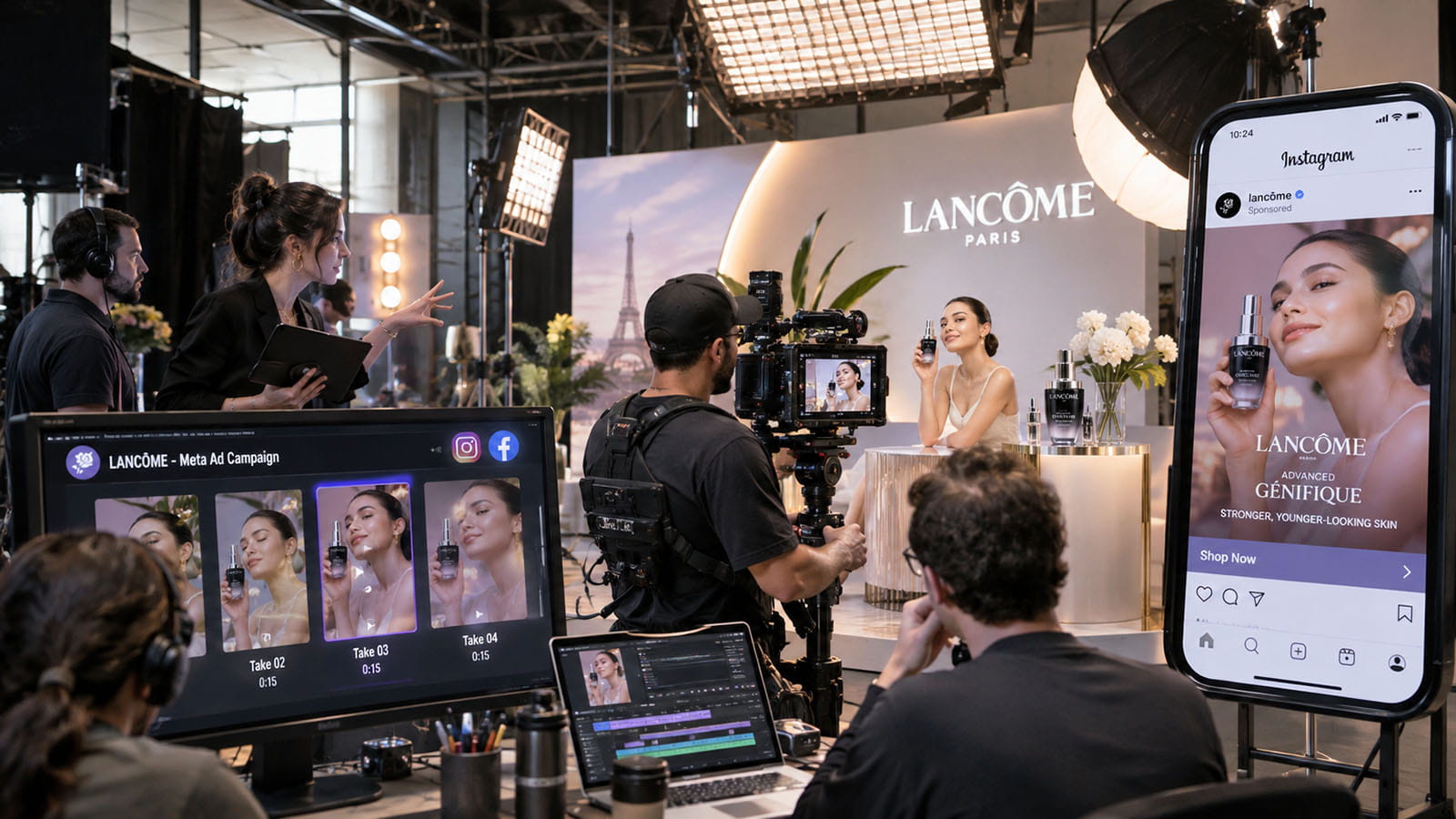
What Meta announced, and what is available
The 15 October 2026 Brand Building Summit announcement covered four developments, not three equivalent new ad formats. The table separates the announcement-stage status from the decision an advertiser needs to make. Meta's announcement text is also available in a published reproduction.
| Product | What it changes | Public status | Planning implication |
|---|---|---|---|
| Ads Super Burst | Reserved reach within 3-24 hours, with optional category exclusivity. | Phased general availability announced for October 2026. | Obtain an account-specific offer and inventory confirmation. |
| First Impression Ads | The first advertising position in Facebook Feed. | Early US test, one brand per day. | Do not promise this placement before access is confirmed. |
| Reels Trending Ads | Ads immediately after selected trending Reels on Facebook and Instagram. | Existing product expanded to 15 standard topics; custom audience exclusions announced for later in 2026. | Verify the topics and controls actually offered. |
| Aggregated View Time | Accumulated viewing across a week. | Early alpha. | Keep experimental measurement separate from committed delivery. |
These are the latest public statuses substantiated in this review, not a declaration that the October rollout has reached every eligible account. In particular, a US test is not a worldwide launch, and an announced exclusion control is not evidence that it is already available.
This is also part of a longer development programme. On 26 March 2026, Meta had already previewed an unnamed reservation alpha for concentrated exposure within up to 24 hours, alongside expanded Reels lineups and creator tools. That earlier announcement provides context; it does not establish that every capability discussed in March is included in today's Super Burst offer.
Ads Super Burst: buying a critical window
The buying logic is straightforward: some exposure is worth more because of when it happens. For a product reveal, premiere or major retail event, reaching people after the decisive moment may not be equivalent to reaching them during it.
Meta identifies Reach Planner as the planning route, with reach and price estimates linked to delivery commitments. More detail comes from AdExchanger's 15 October interview with Meta executive Simon Whitcombe: frequency is fixed at one within the buy; pricing varies by date; inventory is first come, first served. The interview describes delivery within 5% of forecast and category exclusivity on selected US event dates.
Concentrated reach is not concentrated repetition
The frequency detail changes the brief. The objective is not to show the same person an ad repeatedly throughout the window. It is to give the message broad distribution while the moment matters.
That does not establish a brand-wide frequency cap. Someone may also encounter the brand through other campaigns or organic content. Ask which campaigns, accounts and placements the frequency rule covers, and how overlapping activity will be reported.
For creative planning, make the booked exposure useful on its own. A viewer should understand the brand and the main message without needing an earlier teaser or a later explanatory ad. A reservation is not evidence that a three-part story will be delivered in order.
Exclusivity needs a written boundary
Preventing another advertiser from booking the same category window is not the same claim as removing every competing ad from Meta. Do not translate the announcement into a platform-wide competitor blackout. Establish the category definition, territory, dates, covered inventory and treatment of competitors buying through other routes.
A multi-brand business should also clarify whether exclusivity is attached to a product, brand, parent company or another category definition. An automotive group, for example, should not assume that passenger cars, commercial vehicles and finance offers are treated as one category. This is a procurement question, not a published classification rule.
Buy a delivery commitment, not an outcome guarantee
A reach forecast and its tolerance concern delivery. They do not promise recall, positive sentiment, retailer sales or profit. Obtain the actual booking terms, including what happens after underdelivery, a cancelled event, rejected creative or a launch delay. The interview's forecast tolerance is not a substitute for the agreement governing your purchase.
A plausible use case is a national product introduction with distribution ready, a clear message and a fixed launch moment. A poor use case is an unfinished offer, uncertain stock availability or a campaign whose only rationale is spending its remaining quarterly budget.
First Impression Ads: buying position, not guaranteed attention
This product addresses position, rather than a concentrated reach window. Its announced scope is the first ad in Facebook Feed, not the first organic item, the first screen on every Meta app or an unskippable takeover. Meta's interview description likewise identifies Facebook and early testing.
The business hypothesis is that a prominent initial position could make a high-priority message more noticeable. The hypothesis still needs testing. First position does not establish that a person watched, recognised the advertiser or became more likely to buy.
A suitable brief might be a broad brand relaunch with one instantly understandable idea. A less convincing brief is a complex product explanation whose essential information arrives late in the video.
Before considering a purchase, clarify the eligible audience, how a qualifying first impression is defined, the delivery commitment and the reporting available. Do not import Super Burst's frequency, price structure or exclusivity terms into this separate product.
Nor does a premium first position prove that ordinary auction campaigns will become less effective. That is a separate empirical question. Budget changes should follow evidence from the advertiser's own outcomes, not an assumption that everything outside the premium slot has lost value.
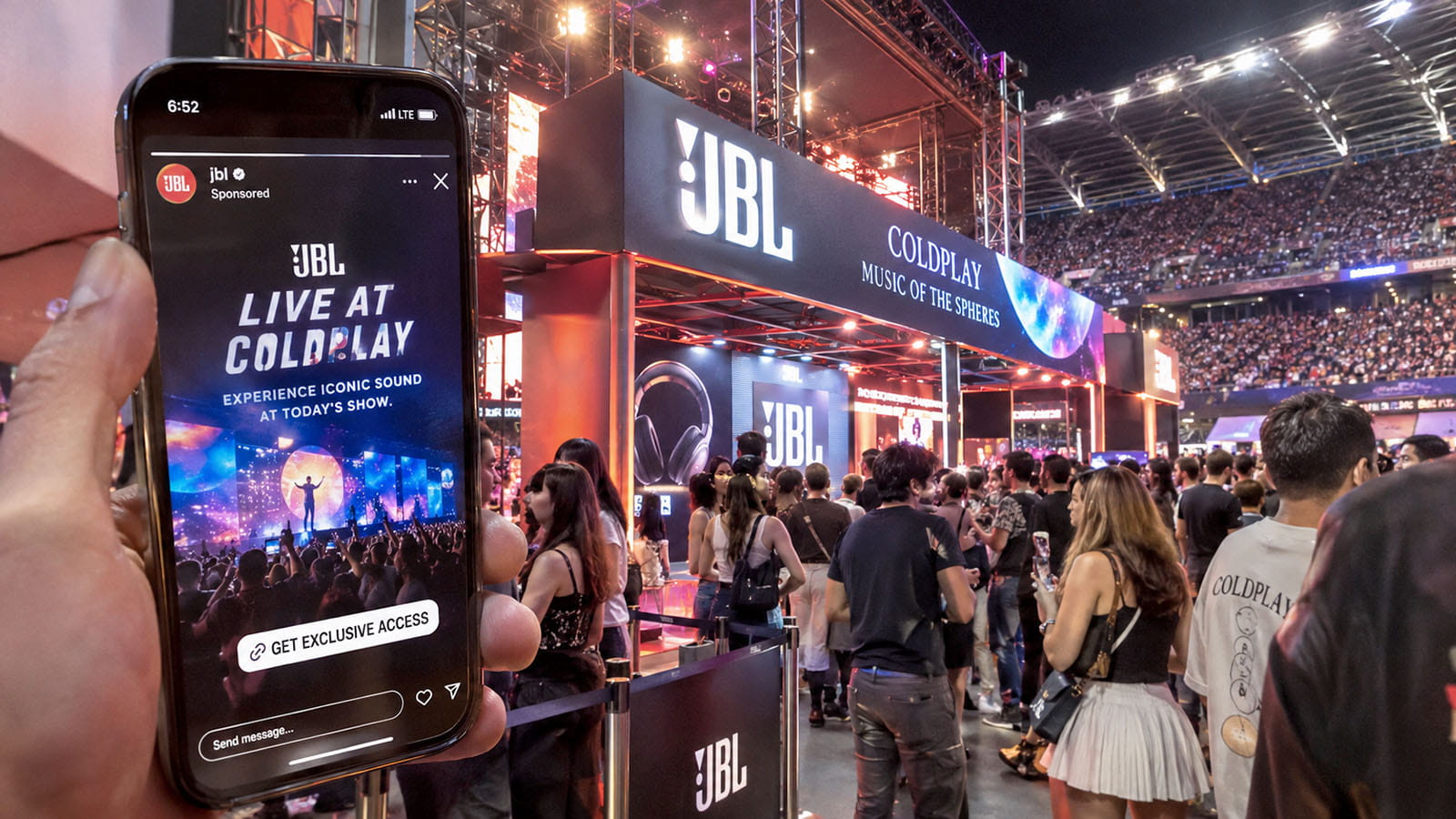
Reels Trending Ads: buying relevant context
The third buying opportunity is about the content surrounding an ad. Meta's earlier official explanation of Reels Trending Ads describes placement immediately after trending content. The October expansion adds Home & Garden and Spanish-language content to the standard topic selection, alongside seasonal lineups.
For a brand, the strategic question is whether the surrounding subject makes the message more relevant. A home-improvement campaign may have a more coherent contextual fit than a generic corporate message placed beside whichever topic happens to be popular.
Keep three concepts separate. A content topic describes the surrounding material. Audience targeting concerns who receives the ad. A creator partnership concerns whose identity and content the advertiser is authorised to use. A Spanish-language lineup is not, by itself, a definition of audience nationality or purchase intent.
Trending adjacency also does not imply endorsement by the adjacent creator, official sponsorship of an event or a promise of a specific Reel. Verify the package rather than adding those meanings in the creative brief.
For brand suitability, ask which content controls, exclusions and delivery reports apply to this exact purchase. Do not assume that controls familiar from another campaign type carry over unchanged. Our review of Meta placement controls explains why a preference, a bid adjustment and an enforceable exclusion are different things.
Aggregated View Time: measuring the week, not just the view
The central idea is to consider repeated encounters together rather than judging every video exposure separately. A viewer might spend a little time with several assets on different days. The analytical question is whether those encounters collectively communicate something useful.
There is an important distinction between the product's ambition and its current implementation. Meta's announcement describes measurement and optimisation while identifying the product as alpha. Jon Loomer's practitioner overview describes a reporting metric for average accumulated weekly viewing and treats optimisation as a possible development. Neither establishes a universally available reporting column or an optimisation setting that every advertiser can select today.
What needs defining before the number becomes useful
A large advertiser should request the measurement specification before adding the metric to an executive scorecard. The public materials reviewed did not resolve the denominator, the precise weekly window, cross-account aggregation or all qualifying viewing conditions.
Ask whether the denominator is people reached, qualifying viewers or another population; whether a week is rolling or calendar-based; and which ads, placements and apps are included. Also clarify repeat plays, organic exposure, identity deduplication and reporting delays. These are questions to settle, not undocumented capabilities to assume.
Do not try to reconstruct a person-level weekly measure by adding average watch times from individual ads. The ads can have different audiences and denominators, and the same people can appear in several rows. Without the necessary overlap information, the arithmetic does not recover a deduplicated weekly result.
An average can hide the distribution
Consider an illustrative audience, not Meta data. Every person receiving ten seconds of viewing produces the same average as half receiving none and half receiving twenty seconds. The business implications may be different, even though the average is identical.
Read any aggregate alongside reach, exposure frequency, creative mix and the audience included. Ask whether growth came from reaching more relevant people, earning longer encounters or repeatedly serving an already familiar group. Do not assume the alpha exposes every breakdown needed to answer those questions.
Viewing is not automatically attention, memory or sales
The IAB attention-measurement framework distinguishes different measurement approaches and treats attention as complementary to delivery and outcome metrics. Playback duration should not be presented as eye-tracked attention or an independently accredited cross-media currency without evidence about the method.
There is relevant research beyond Meta. Lumen, Amazon Ads and Cint describe research across 270 cross-media campaigns examining accumulated attention and brand lift. That supports investigating cumulative exposure. It does not validate Meta's implementation, establish that the studies use equivalent seconds, or identify this work as the unnamed independent study in Meta's October announcement.
Our recommendation is to use accumulated viewing to diagnose a creative and media plan, then validate the intended brand or business effect separately. More time with a weakly branded or irrelevant message is not automatically more value.
What the published results do and do not prove
The following figures are Meta-reported findings in its reproduced summit statement, not results of metricfixer experiments.
| Evidence | Reported finding | What it does not establish |
|---|---|---|
| Super Burst tests | Median lifts of 2.9 points in ad recall and 0.6 points in intent; median reach of 34 million per flight. | A minimum purchase size, a forecast for another country, or a guaranteed return. |
| Campaigns including Reels Trending Ads | More than 5 percentage points of action-intent lift against no campaign exposure; a separately described 5-point incremental unaided-awareness lift. | That switching an equal budget from ordinary Reels produces the same improvement. |
| Accumulated viewing research | Meta reports 32% more offline sales for five seconds accumulated over a week versus one continuous five-second view. | A universal viewing threshold, a forecast for an individual brand, or proof that using the alpha causes that sales increase. |
Percentage points and relative percentages are different. An awareness rate moving from 20% to 23% rises by three percentage points and by 15% relative to its starting value. These invented numbers illustrate the distinction; they are not the baselines behind Meta's results.
The comparison group matters just as much. A campaign-versus-no-campaign result answers whether that campaign helped relative to no exposure. It does not automatically answer whether a premium placement outperformed the best alternative use of the same money.
The full study designs, uncertainty ranges and campaign economics needed for an independent assessment were not available in the materials reviewed. Treat the figures as reasons to investigate, not as parameters to paste into a forecast. A reported median also says little about the spread of outcomes.
Building a plan for a large brand
The following is metricfixer's planning framework, not a Meta package or a prescribed budget split. It separates a launch moment from the work needed before and after it.
Keep the underlying programme intact
Start with the activity that already serves a defined purpose: introducing the brand, generating qualified demand, supporting distribution or capturing existing interest. Add a premium purchase only where its timing, position or context solves a specific shortfall.
Meta's existing tools remain relevant. Its buying-type training distinguishes auction and reservation, including frequency controls and scheduling. Its brand-building guidance also describes Target Frequency for maintaining a desired weekly exposure level. These are established planning options, not additional October launches or guarantees of compatibility with each new product.
For multinational advertisers, design a market-by-market plan. Differences in access, language, retail coverage and event timing can justify different choices. Do not force every country into the same premium purchase merely to make the global presentation look consistent.
Build recognition across assets without requiring a viewing order
Use a recognisable brand, a clear product or benefit and a coherent visual identity across the campaign. Different videos can explain different reasons to choose the product while still being understandable independently. Repeating brand cues is not the same as repeating an identical execution indefinitely.
Lumen's creative guidance emphasises immediate message clarity and warns against treating attention metrics as the objective. For this type of programme, test whether a brief encounter communicates the intended brand association, not only whether the opening holds a viewer.
Creator-led material may help when the creator has a credible connection to the product. Meta's March creator-tool updates address discovery and partnership-ad management. Keep that creative decision separate from buying trending adjacency, and confirm permissions, usage periods and supported formats before reserving inventory.
Pre-test the main ideas before the expensive date. A booking deadline is a poor time to discover that the message is confusing. Our guide to creative testing and low-delivery ads explains why ordinary delivery is not a fair test of every asset.

Match the programme to the business model
For a packaged-goods launch, align the moment with actual distribution and evaluate retailer or panel evidence where appropriate. For an automotive introduction, initial recognition and later qualified enquiries may require different observation periods. For entertainment, the release date may make compressed reach more valuable, but ticket sales can still be influenced by reviews, publicity and distribution.
These are illustrative planning scenarios, not published product case studies. Their common requirement is operational readiness: the product must be available, the destination must work, and the commercial team must know what success means.
Budget against the next-best alternative
There is no defensible universal rule that a large brand should assign a fixed percentage of its budget to these products. Compare the incremental all-in cost with a credible alternative: more ordinary reach, a different channel, stronger creative or another commercially important activity.
For illustration only, suppose the premium plan costs an additional $120,000 after including production and measurement. At an assumed $40 contribution per additional sale, it would need 3,000 additional sales beyond the alternative to cover that extra cost. These are invented planning inputs, not Meta prices or performance benchmarks.
Illustrative break-even calculation:
Additional all-in cost / contribution per incremental sale
= $120,000 / $40
= 3,000 incremental sales beyond the alternative plan
A long-term brand objective may require a different decision rule, but it still needs one. Agree the evaluation period and acceptable evidence before buying, rather than redefining success after the results arrive.
How to measure whether the premium was worthwhile
Separate three questions: did the delivery occur as agreed; did it change brand perceptions; and did it generate additional business outcomes? A campaign can satisfy one without satisfying the others.
Audit delivery against the booking
Preserve the approved forecast, audience definition, timing, scope of exclusivity, costs and final delivery report. Reconcile booked and delivered reach using the agreed measurement basis. Record material substitutions and restrictions, not only total impressions.
Do not add reach from different campaigns or platforms and call the sum unique people. Audiences can overlap. Likewise, a person reached during the premium flight may already have seen the brand elsewhere. Distinguish delivery within the buy from incremental reach beyond the rest of the media plan.
Choose the outcome study before the launch
Meta's lift-study training distinguishes Brand Lift, covering perceptions such as awareness and consideration, from Conversion Lift, covering additional actions such as purchases. Its experimentation course also separates these from A/B and creative tests. A higher video-viewing number does not answer all of those questions.
Confirm eligibility and technical compatibility before committing spend. Public evidence reviewed here does not establish that every premium reservation can participate in every self-service experiment. Ask whether a valid control can be maintained, how allocation works and what other campaigns must be included.
Where a suitable design is feasible, an informative comparison is the existing programme versus that programme plus the premium purchase. This estimates the value of adding the purchase, but not necessarily whether it was the best use of the additional budget.
For the allocation question, consider an equally funded alternative: the same underlying programme plus ordinary media of equivalent additional cost. A three-group design can address both questions, but it requires enough sample, suitable inventory and support for the allocation. It is a proposed research design, not a claim that Ads Manager provides a one-click template for these products.
Keep analysis aligned with the study's assignment and estimand. Comparing people who happened to watch an ad with people who did not can introduce selection bias: the groups may have differed before the campaign. A lift result should not be replaced by an attractive exposed-versus-unexposed dashboard comparison.

Plan for imperfect evidence
When a controlled platform study is not feasible, a carefully designed geographic or repeated-market test may help. It still needs comparable markets, a pre-period, adequate sample and consideration of spillover. A single national burst coinciding with a price promotion, television campaign and news coverage cannot cleanly identify its own contribution.
Marketing mix modelling can contribute to a broader assessment when the data contain useful variation. Do not promise that a model will isolate one short burst simply because that line item has a separate campaign name.
Set the observation period around the intended outcome, not the media flight alone. A short delivery window does not require judging every brand or sales effect within the same day. Report uncertainty, distinguish an inconclusive result from a meaningful negative result, and avoid declaring success by selecting whichever metric improved.
Keep attribution and business records separate
Use platform reporting to understand delivery and attributed activity, and business records to check sales quality, returns and commercial value. Neither a post-campaign sales spike nor a rise in platform-attributed conversions automatically proves incrementality. The distinction between attribution systems is explored in our Meta Ads and GA4 measurement review.
For leadership reporting, show delivery compliance, the chosen brand or sales effect, the uncertainty around that effect and the full cost. Put viewing diagnostics alongside those results, not in place of them.
Questions to answer before booking
A large budget makes unresolved terms more expensive. Use the following as a procurement and measurement checklist, not as a list of capabilities Meta has promised.
| Area | Evidence to obtain |
|---|---|
| Access and scope | Confirm the eligible account, market, dates, placements, audience definition and supported creative. Name the product in the actual offer. |
| Price and commitment | Document the quote, minimum commitment if applicable, fees, taxes, payment timing and inventory hold or expiry. |
| Delivery and frequency | Specify the guaranteed quantity, acceptable tolerance, deduplication boundary, frequency scope and remedy for underdelivery. |
| Exclusivity | Record the category, territory, time zone, inventory covered, competing buying routes and any exceptions. |
| Operational changes | Set approval deadlines, replacement-asset rules, cancellation terms, postponement options and a named escalation owner. |
| Suitability and rights | Confirm applicable content controls, reporting, creative permissions and any event-related claims or restrictions. |
| Measurement | Agree study feasibility, comparison groups, primary outcome, sample needs, reporting delay, data access and analysis period. |
| Decision rule | Define what would justify repeating the purchase, revising it, stopping it or recording insufficient evidence. |
Do not copy minimum budgets or audience thresholds from an older reservation product and present them as Super Burst requirements. No universal price card or minimum spend was established by the public materials reviewed. The relevant evidence is the current offer for the account and market.
Agencies should preserve the client's approval of the objective, premium cost and evidence standard. Buying the contracted exposure successfully and proving that it outperformed the alternative are different responsibilities.
A practical decision framework
Start with the business problem. Identify whether timing, first position or contextual adjacency is genuinely necessary. Then confirm product access and terms, prepare the creative and measurement, and run a bounded test whose result can change a future decision.
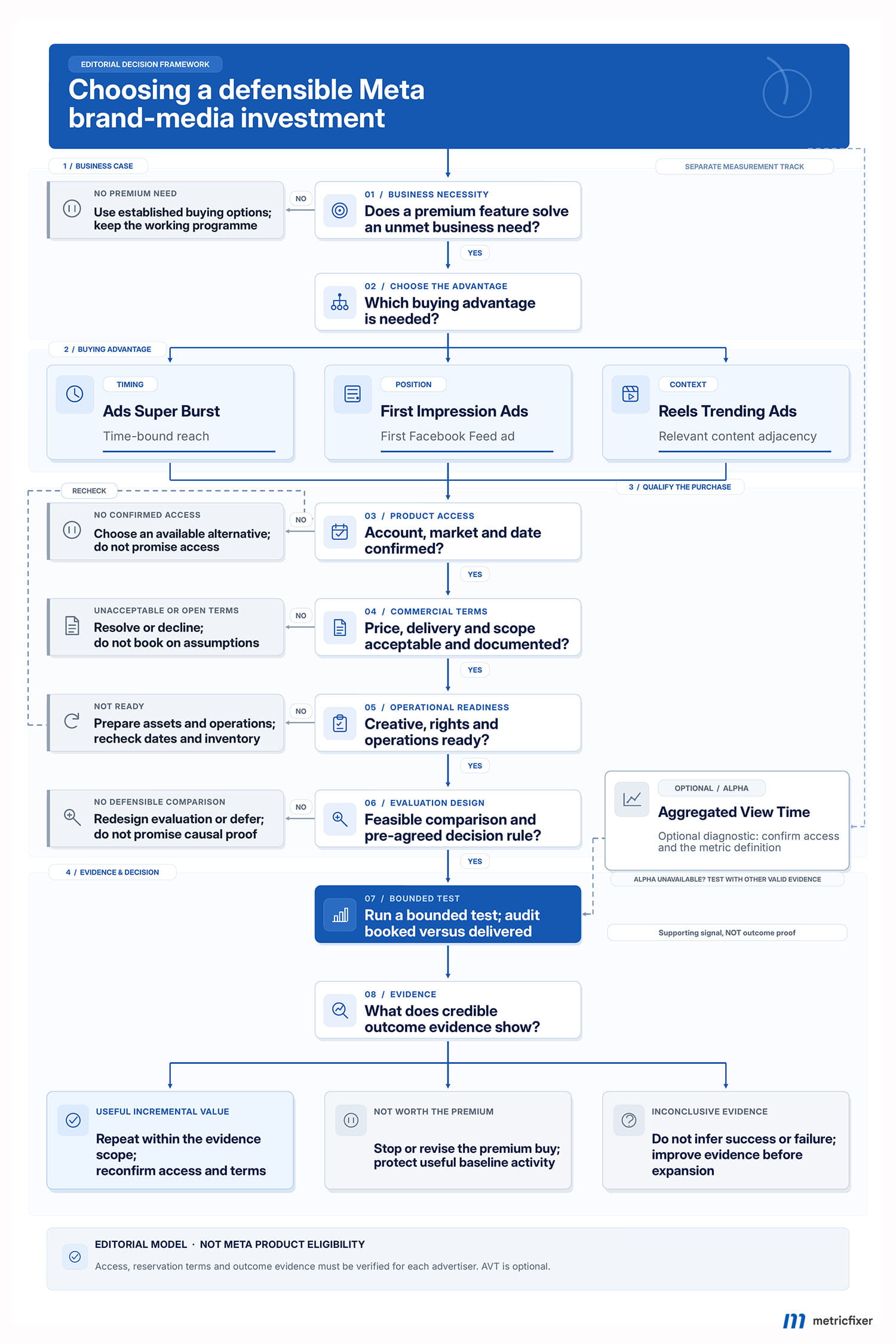
An inconclusive test should not automatically become a rollout. A well-delivered campaign with no useful incremental benefit may be a reason to change the purchase. Conversely, a higher price can be justified when it produces a sufficiently valuable result that the alternative could not deliver.
The conclusion: buy a premium because its specific advantage is worth paying for, not because it is new. Large brands need stronger planning and evidence, not merely larger numbers in a report.
Methodology and sources
This review was completed on 4 November 2026. Product descriptions were checked against Meta's October summit announcement text as reproduced publicly, first-hand executive statements in AdExchanger's 15 October interview, and accessible Meta Newsroom and Blueprint materials. Practitioner descriptions were used to identify implementation uncertainty, not to turn an alpha into a general release.
The original Meta announcement redirected this research session to a login page. Its text was inspected through the 16 October reproduction, with key product details checked against the executive interview. This access limitation is not evidence that the announcement has been withdrawn.
The measurement discussion uses IAB's public attention-framework overview, Lumen's published cumulative-attention research summary and Meta's training linked in the relevant sections. No private study dataset, authenticated advertiser account, booking agreement or live alpha interface was examined.
Meta's performance figures remain vendor-reported findings. The buying framework, proposed comparisons, hypothetical scenarios and break-even example are metricfixer's editorial analysis. We did not independently reproduce the reported lifts, confirm account-level availability or infer undocumented pricing, API fields or optimisation controls.
This article provides advertising, measurement and operational information, not a media-buying commitment, legal advice or a guarantee of campaign performance. Eligibility, inventory, prices, product definitions, experimental features and booking terms may change and must be confirmed for the relevant account and market. metricfixer is not affiliated with Meta, Facebook, Instagram, AdExchanger, Jon Loomer Digital, IAB, MRC, Lumen, Amazon Ads, Cint or the other organisations mentioned.