Ecommerce Tracking Implementation

Implement the ecommerce measurement your purchase flow can support, with the data needed for agreed decisions.

We review the purchase flow and technical stack, then scope the needed dataLayer, GTM mapping, agreed GA4 ecommerce events and relevant destinations. Reasonable tracking-related website changes may fit; substantial purchase-function redevelopment is separately estimated.

  • A reviewed purchase flow and agreed ecommerce measurement plan
  • Scoped dataLayer and GTM mapping for the required business flow
  • Validation of agreed purchase, order, value, currency and item-data behavior

How does your ecommerce purchase flow work?

Share the ecommerce platform, checkout or purchase architecture, current dataLayer, purchase/value/currency requirements, analytics or advertising destinations, and unusual provider constraints. We agree access and scope later; do not send passwords, private keys, API secrets or customer personal data.

You can upload multiple files.

Business hours: Monday–Saturday, 09:00–22:00 (Europe/Warsaw).

Send your request anytime — we’ll reply by email.

Tracking shaped by the real purchase journey

  • Review the purchase architecture

    Understand the checkout, provider handoffs and current signals before defining implementation.

  • Map the needed ecommerce data

    Implement the agreed order identifier, value, currency and item data required for the business flow.

  • Validate against the journey

    Check agreed completed-purchase signals and protect against unintended duplicate purchase reporting.

How ecommerce tracking is implemented

  1. Assess the purchase flow

    We review the technical stack, checkout behavior, current dataLayer and agreed destinations.

  2. Scope and implement the tracking

    We map the required ecommerce data through the agreed dataLayer, GTM and destination configuration.

  3. Validate the agreed path

    We test the agreed purchase path and document relevant data, duplication and destination limits.

Quality tracking without an unlimited redevelopment promise

Normal work can include a purchase-flow review, relevant ecommerce dataLayer work, GTM mapping, the agreed GA4 ecommerce events, purchase or order identifiers, value, currency, required item data and relevant agreed destinations. The event set is chosen for the agreed business flow; it does not promise every GA4 ecommerce event by default.

Reasonable, explicitly scoped website or dataLayer changes necessary for quality tracking may be included. Website state and technical stack are part of the estimate. A real or agreed test purchase may be used to validate the expected signal, identifier, value, currency, item data and duplicate-purchase behavior where relevant.

If a non-standard, incomplete or technically broken purchase cycle cannot support high-quality tracking without substantial functional redevelopment, that redevelopment is separately estimated before work proceeds. Theme or plugin redevelopment, application logic, checkout reconstruction, substantial provider integration and major custom commerce development are not automatically included.

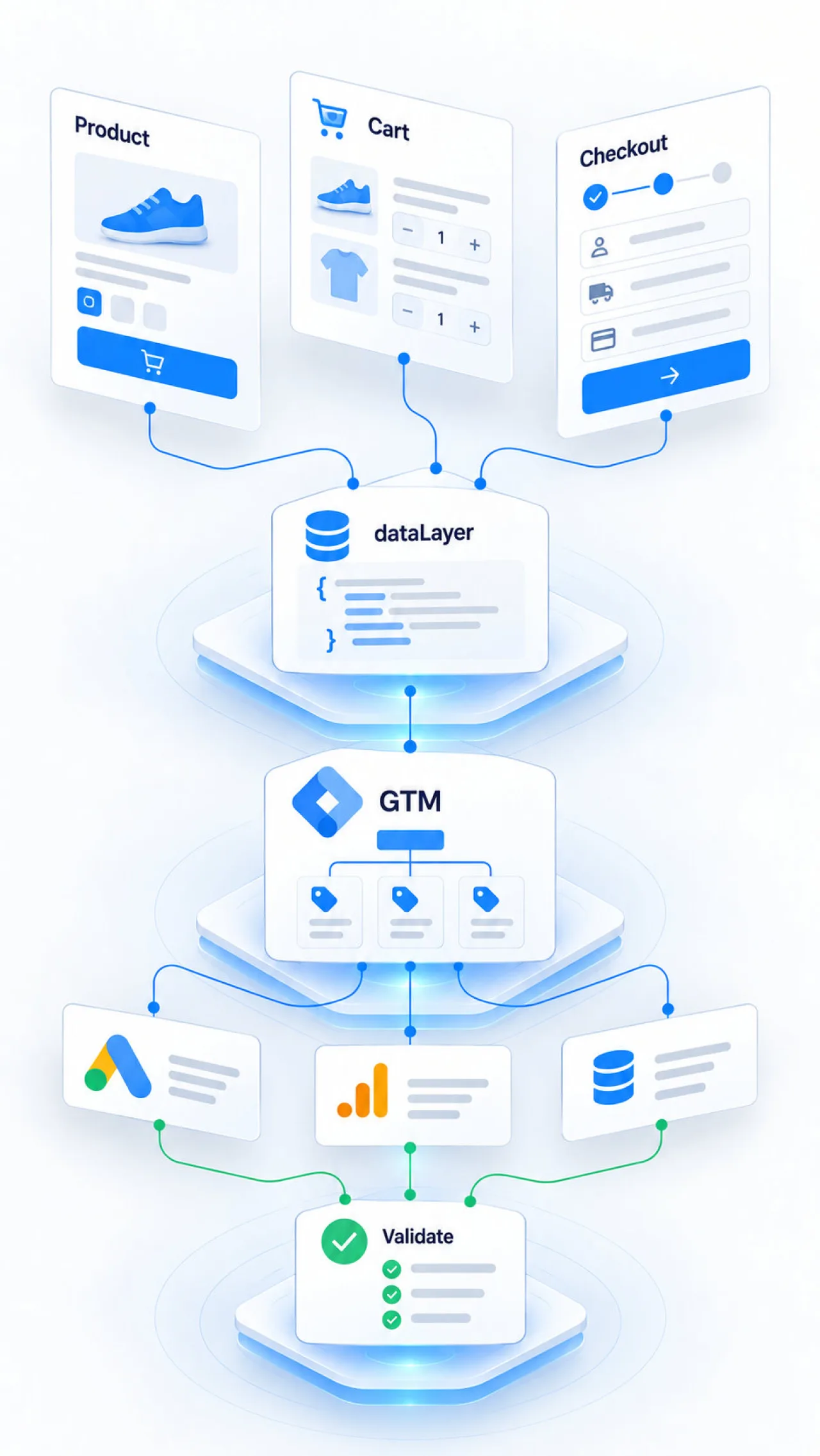
Ecommerce Tracking Implementation

Start with the purchase journey you actually run

Describe your platform, checkout path and measurement needs so we can estimate a useful ecommerce tracking scope.

Describe the purchase flow

Aug 30, 2026 • Online advertising

Meta campaign to order and revenue reconciliation workflow for Facebook and Instagram Ads

How to Reconcile Meta Campaigns With Transaction IDs and Real Revenue

Meta Ads Manager can report purchases and attributed conversion value, but it cannot act as an order ledger. This guide shows how to reconcile Meta campaigns with backend order IDs, Pixel/CAPI event IDs, GA4 transaction IDs, refunds, and real revenue in a BI warehouse.