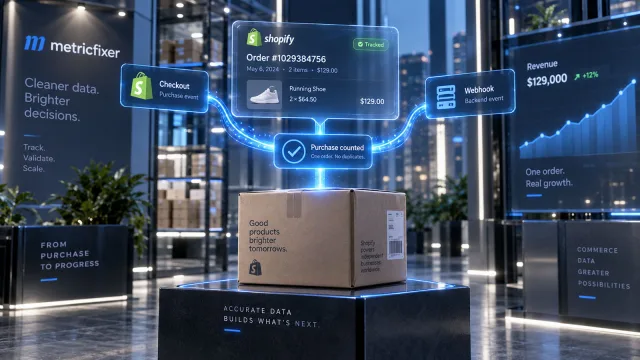
Missing Purchase Conversion Recovery

Reduce avoidable purchase-event loss from real completed orders.

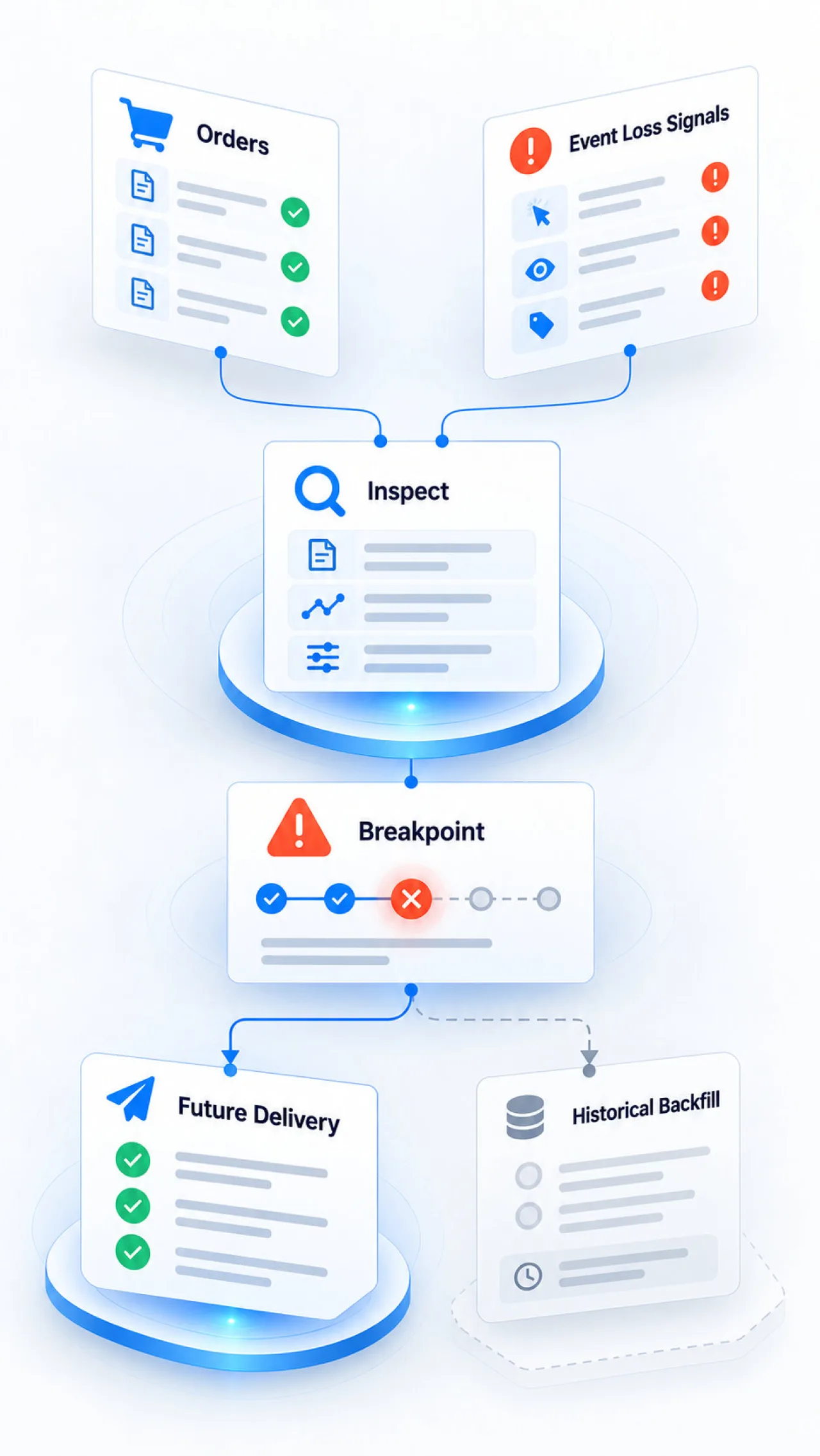
We trace the gap between your store's order evidence and expected measurement, select a maintainable delivery route and validate the agreed purchase path. Recovery focuses on future reliability; historical backfill is assessed separately when the necessary data and platform rules allow it.

  • A diagnosis of the agreed purchase-event loss
  • A scoped store-side or suitable module-based delivery route
  • Purchase identity, value and duplicate-handling validation with documented limits

Where are real purchases missing from measurement?

Tell us the ecommerce/CMS platform, checkout and payment path, which purchases appear missing, where completed orders are recorded, destinations, current browser/server events, available transaction/value/currency fields and plugins or modules. We review the initial request and estimate scope at no charge. Describe consent restrictions; do not send order exports, customer personal data, passwords or API secrets.

You can upload multiple files.

Business hours: Monday–Saturday, 09:00–22:00 (Europe/Warsaw).

Send your request anytime — we’ll reply by email.

Start with the order evidence

  • Find the loss point.

    Check whether the gap comes from the browser, checkout handoff, store data, event logic or destination path.

  • Choose a maintainable route.

    Compare eligible identifier persistence and later delivery with a suitable established module for the named platform.

  • Check the purchase facts.

    Validate the agreed order identity, completion time, value, currency and browser/server overlap.

From missing event to checked delivery

  1. Trace a documented gap.

    Compare reliable completed-order evidence with the existing measurement paths and identifier availability.

  2. Agree and implement the route.

    Select the suitable scoped configuration or module and confirm dependencies and separate fees.

  3. Validate the future purchase path.

    Check agreed purchase cases under separately authorized implementation testing and document evidence and remaining limits.

Better future delivery does not recreate missing history

Purchase events can be lost when a thank-you page fails to load, a redirect or checkout boundary breaks the signal, navigation interrupts the browser, identifiers are unavailable, event logic is broken or duplicated, or a destination or module fails. Consent and privacy restrictions can also limit collection. We diagnose the agreed gap rather than assume one server-side fix solves every cause.

Where suitable, we can preserve the required eligible order facts and identifiers in the store for later delivery. For a common CMS, an established compatible module may be the more economical and maintainable option. We assess its event semantics, consent behavior, duplicate controls, support and operating cost before choosing it. Module licenses and other third-party fees are separate unless quoted as included.

Historical purchases can only be considered for backfill when reliable order data, usable matching identifiers, permitted processing and the destination's current import window support it. Data that was never recorded cannot be reconstructed. Validation does not guarantee attribution, restored ROAS, accounting equality or automatic refund and cancellation handling.

We store and transmit only the minimum measurement data reasonably required for the agreed design, with a clear purpose, appropriate retention, destination requirements and the customer’s permissions and consent context. Server, API or offline delivery does not bypass consent, privacy or platform rules. Hashing does not replace consent or remove privacy obligations; we do not provide legal advice.

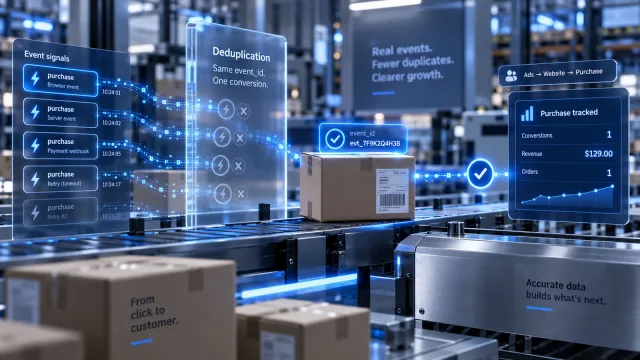
Duplicate controls use the selected destination’s transaction, event, import or adjustment identity as applicable. We do not apply one universal event_id rule or deliberately double-count browser, server and offline versions of the same business outcome.

Where observable, acceptance checks the real source event, required available data, correct payload or import, destination receipt or processing diagnostics, and duplicate controls. Acceptance does not guarantee matching, attribution, a reported conversion, bidding use, lead or sale credit, or CPA or ROAS improvement.

Reasonable agreed configuration in named existing systems may fit. Substantial custom CRM, CMS/plugin, bot/app or backend development, major middleware, new warehouses and extensive historical cleanup/import are separately estimated. Third-party plans, messaging fees, module licenses, hosting, subscriptions and paid connectors are separate unless expressly quoted. Recurring uploads, monitoring, maintenance, CRM operation and continuing data cleanup are not automatically included.

<redacted>

Show us where the purchase path loses its signal

Describe the completed-order source and the missing measurement so we can choose a realistic recovery scope.

Describe the purchase gap

Sep 20, 2026 • Analytics & Conversion Tracking

Meta Conversions API: When It Helps and When It Just Repeats Data

Meta Conversions API: When It Helps and When It Just Repeats Data

Meta Conversions API can recover missing purchases, add useful identifiers, and report CRM outcomes. But repeating the same data is not automatic enrichment, and Gateway does not guarantee longer-lived Safari cookies. Learn which setup addresses which gap.

Sep 14, 2026 • Analytics & Conversion Tracking

Meta Pixel & CAPI Deduplication

Meta Pixel and CAPI Deduplication: How event_id Actually Works

One purchase can generate several tracking requests. Learn how to preserve its identity across Meta Pixel, CAPI, payment webhooks, and server retries without confusing raw events with attributed conversions.